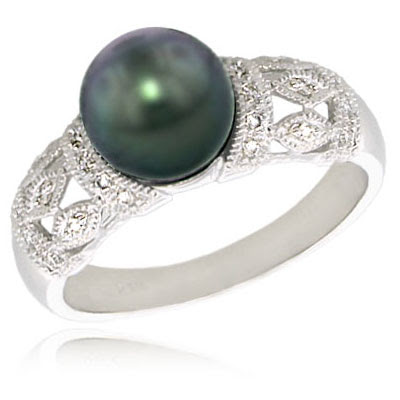
Saturday, September 5, 2009

Diamonds are a mineral

Diamonds are a mineral, a natural crystalline substance, the transparent form of pure carbon or nearly pure carbon. Diamonds have extraordinary qualities. Diamonds have a broad colour range, high refraction, high dispersion of fire, very low reactivity to chemicals, rarity, and of course, extreme hardness and durability. Diamonds are known as the "king of gems" they glitter, dazzle, and symbolize purity and strength.

A diamond is the oldest thing you will ever own, probably 3 billion years in age, fully two thirds the age of the Earth. A diamond is a strategic and high-tech supermaterial for our technological society. Diamond is the birth stone for the month of April.

A diamond is composed of the single element carbon, and it is the arrangement of the C atoms in the lattice that give a diamond its amazing properties. Both diamond and graphite are composed of just carbon. However a diamond is the hardest known material and graphite is one of the softest, this was caused by a rearrangement of the way the atoms are bonded together. Diamond carbon atoms are linked in a regular three-dimensional lattice with a repeating or crystalline pattern.
Diamond belongs to the cubic, or 'isometric' crystal system. The most commonly seen crystal structures or arrangements are:
• Octahedron (8 faces)
• Cube (6 faces)
• Dodecahedron (12 faces)
A diamond is the ultimate gemstone, having few weaknesses and many strengths. It is well known that diamonds are the hardest substance found in nature, but few people realize that diamonds are four times harder than the next hardest natural mineral, corundum - sapphires and rubies.

Natural diamonds are classified by the type and level of impurities found within them.
• Type Ia diamond - Most natural diamonds are of this type, which contain up to 0.3% nitrogen.
• Type Ib diamond - Very rare (~0.1%) in nature, but almost all synthetic (industrial) diamonds are of this type. They contain nitrogen at concentrations of up to 500 ppm.
• Type IIa diamond - Very rare in nature, these diamonds contain so little nitrogen that it can't be easily detected by the usual IR or UV absorption measurements.
• Type IIb diamond - Extremely rare in nature. These have such a low concentration of nitrogen (even lower than type IIa) that the crystal is a p-type semiconductor (due to uncompensated B acceptor impurities).


Silver

Silver is a chemical element with the chemical symbol Ag and atomic number 47. A soft, white, lustrous transition metal, it has the highest electrical conductivity of any element and the highest thermal conductivity of any metal. The metal occurs naturally in its pure, free form (native silver), as an alloy with gold (electrum) and other metals, and in minerals such as argentite and chlorargyrite. Most silver is produced as a by-product of copper, gold, lead, and zinc refining.
Silver has been known since ancient times and has long been valued as a precious metal, used to make ornaments, jewelry, high-value tableware, utensils (hence the term silverware), and currency coins. Today, silver metal is used in electrical contacts and conductors, in mirrors and in catalysis of chemical reactions. Its compounds are used in photographic film and dilute solutions of silver nitrate and other silver compounds are used as disinfectants. Although the antimicrobial uses of silver have largely been supplanted by the use of antibiotics, further research into its clinical potential is in progress.


Pearls

A pearl is a hard, general spherical object produced within the soft tissue (specifically the mantle) of a living shelled mollusk. Just like the shell of a mollusk, a pearl is made up of calcium carbonate in minute crystalline form, which has been deposited in concentric layers. The ideal pearl is perfectly round and smooth, but many other shapes of pearls (baroque pearls) occur. The finest quality natural pearls have been highly valued as gemstones and objects of beauty for many centuries, and because of this, the word pearl has become a metaphor for something very rare, very fine, very admirable, and very valuable.

Valuable pearls occur in the wild, but they are very rare. Cultured or farmed pearls make up the majority of those that are currently sold. Pearls from the sea are valued more highly than freshwater pearls. Imitation or fake pearls are also widely sold in inexpensive jewelry, but the quality of their iridescence is usually very poor - and generally speaking, artificial pearls are easily distinguished from genuine pearls. Pearls have been harvested and cultivated primarily for use in jewelry, but in the past they were also stitched onto lavish clothing. Pearls have also been crushed and used in cosmetics, medicines, or in paint formulations.
Pearls that are considered to be of gemstone quality are almost always nacreous and iridescent, like the interior of the shell that produces them. However, almost all species of shelled mollusks are capable of producing calcareous concretions, creating pearls of lesser shine or less spherical shape. Although these may also be legitimately referred to as "pearls" under U. S. Federal Trade Commission rules, and are formed in the same way, most of them have no value, except as curios.


Diamond

In mineralogy, diamond (from the ancient Greek adámas, meaning "proper" or "unalterable") is an allotrope of carbon, where the carbon atoms are arranged in a variation of the face-centered cubic crystal structure called a diamond lattice. Diamond is the second most stable form of carbon, after graphite; however, the conversion rate from diamond to graphite is negligible at ambient conditions. Diamond is specifically renowned as a material with superlative physical qualities, most of which originate from the strong covalent bonding between its atoms. In particular, diamond has the highest hardness and thermal conductivity of any bulk material synthesized so far. Those properties determine the major industrial application of diamond in cutting and polishing tools.
Diamond has remarkable optical characteristics. Because of its extremely rigid lattice, it can be contaminated by very few types of impurities, such as boron and nitrogen. Combined with the wide transparency, this results in clear, colorless appearance of most natural diamonds. Small amounts of defects or impurities (about one per million of lattice atoms) color diamond blue (boron), yellow (nitrogen), brown (lattice defects), green, purple, pink, orange or red. Diamond also has relatively high optical dispersion, that is ability to disperse light of different colors, which results in its characteristic luster. Excellent optical and mechanical properties, combined with efficient marketing, make diamond the most popular gemstone.
Most natural diamonds are formed at high-pressure high-temperature conditions existing at depths of 140 to 190 kilometers (87 to 120 mi) in the Earth mantle. Carbon-containing minerals provide the carbon source, and the growth occurs over periods from 1 billion to 3.3 billion years, which respectively corresponds to roughly 25% and 75% of the age of the Earth. Diamonds are brought close to the Earth surface through deep volcanic eruptions by a magma, which cools into igneous rocks known as kimberlites and lamproites. Diamonds can also be produced synthetically in a high-pressure high-temperature process which approximately simulates the conditions in the Earth mantle. An alternative, and completely different growth technique is chemical vapor deposition. Several non-diamond materials, which include cubic zirconia and silicon carbide and are often called diamond simulants, resemble diamond in appearance and many properties. Special gemological techniques have been specially developed to distinguish natural and synthetic diamonds and diamond simulants.


GemStone

A gemstone or gem (also called a precious or semi-precious stone) is a piece of attractive mineral, which—when cut and polished—is used to make jewelry or other adornments. However certain rocks, and organic materials are not minerals, but are still used for jewelry, and are therefore often considered to be gemstones as well. Most gemstones are hard, but some soft minerals are used in jewelry because of their lustre or other physical properties that have aesthetic value. Rarity is another characteristic that lends value to a gemstone.
Gemstones are identified by gemologists, who describe gems and their characteristics using technical terminology specific to the field of gemology. The first characteristic a gemologist uses to identify a gemstone is its chemical composition. For example, diamonds are made of carbon (C) and rubies of aluminium oxide (Al2O3). Next, many gems are crystals which are classified by their crystal system such as cubic or trigonal or monoclinic. Another term used is habit, the form the gem is usually found in. For example diamonds, which have a cubic crystal system, are often found as octahedrons.
Gemstones are classified into different groups, species, and varieties. For example, ruby is the red variety of the species corundum, while any other color of corundum is considered sapphire. Emerald (green), aquamarine (blue), bixbite (red), goshenite (colorless), heliodor (yellow), and morganite (pink) are all varieties of the mineral species beryl.
Gems are characterized in terms of refractive index, dispersion, specific gravity, hardness, cleavage, fracture, and luster. They may exhibit pleochroism or double refraction. They may have luminescence and a distinctive absorption spectrum.
Material or flaws within a stone may be present as inclusions.


Gold

Gold is a chemical element with the symbol Au and an atomic number of 79. It has been a highly sought-after precious metal for coinage, jewelry, and other arts since the beginning of recorded history. The metal occurs as nuggets or grains in rocks, in veins and in alluvial deposits. Gold is dense, soft, shiny and the most malleable and ductile pure metal known. Pure gold has a bright yellow color and luster traditionally considered attractive, which it maintains without oxidizing in air or water. It is one of the coinage metals and formed the basis for the gold standard used before the collapse of the Bretton Woods system in 1971.

At the end of 2006, it was estimated that all the gold ever mined totaled 158,000 tonnes. This can be represented by a cube with an edge length of just 20.2 meters. Modern industrial uses include dentistry and electronics, where gold has traditionally found use because of its good resistance to oxidative corrosion and excellent quality as a conductor of electricity.

Chemically, gold is a transition metal and can form trivalent and univalent cations upon solvation. Compared with other metals, pure gold is more chemically unreactive, but it is attacked by aqua regia (a mixture of acids), forming chloroauric acid, and by alkaline solutions of cyanide but not by single acids such as hydrochloric, nitric or sulfuric acids. Gold dissolves in mercury, forming amalgam alloys, but does not react with it. Since gold is insoluble in nitric acid which will dissolve silver and base metals, this is exploited as the basis of the gold refining technique known as "inquartation and parting". Nitric acid has long been used to confirm the presence of gold in items, and this is the origin of the colloquial term "acid test", referring to a gold standard test for genuine value.

The color of pure gold is metallic yellow. Gold, caesium and copper are the only metallic elements with a natural color other than gray or white. The usual gray color of metals depends on their "electron sea" that is capable of absorbing and re-emitting photons over a wide range of frequencies. Gold reacts differently, depending on subtle relativistic effects that affect the orbitals around gold atoms.
Common colored gold alloys such as rose gold can be created by the addition of various amounts of copper and silver, as indicated in the diagram above. Alloys containing palladium or nickel are also important in commercial jewelry as these produce white gold alloys. Less commonly, addition of manganese, aluminium, iron, indium and other elements can produce more unusual colors of gold for various applications.


Sunday, November 30, 2008

Platinum Jewelry History

Platinum Jewelry History

Platinum jewelry was first used in ancient Egypt and it has been popular ever since. However, it was not until the late 1800's that the popularity of platinum reached the current heights when royalty started to wear them. The world's most famous diamonds, Star of Africa and Hope Diamond, are both in platinum. In the beginning of World War II, the US government declared it a strategic metal and could only be used for official business and platinum jewelry ceased.

Now, platinum has reached its heights once again and is one of the most popular precious metals in personal accessories, especially popular as settings for the highest quality gemstones. Most people who enjoys white gold or silver jewelry would go for platinum if they have the money to spare. If you really want to be impressive, you know what to give her!


How to Choose a Platinum Ring

1. Know the purity content of your platinum ring. As with all precious metals, platinum must be alloyed with other metals in order to achieve the hardness required for jewelry. A ring that is alloyed with 80% Platinum and 20% other metals is worth a lot less than a ring that is 95% pure platinum.

2. Check the hallmark on the inside of the ring. Federal regulations require all platinum bands to bear a stamp or "hallmark" on the inside of the band. If it says "IridPlat", or ".90Plat/Ir" then the ring is only 90% pure platinum, and you should pay less for it than a ring that is 95% pure platinum. If the hallmark says "Plat" or ".95 Plat", then the ring is considered pure platinum and commands a premium price.

3. Ask your jeweler about the alloy used in your platinum ring. If you are buying a pure platinum ring (95% platinum), then it should be alloyed with either Cobalt or Ruthenium. These alloys produce a harder platinum that can hold a mirror bright polish and resist years of daily wear. Many .95 pure platinum rings are alloyed with the less expensive metal Iridium, but these rings are softer and will become scratched and dull within a year of daily wear.

* When it comes to .95 pure platinum, the secret to a brighter platinum ring is the alloy. You can learn more about the alloys and view the difference in actual photos of rings after one year of wear on this page about platinum wedding rings.

Warnings

* If you are interested in buying an antique platinum ring, it will probably bear the hallmark "IridPlat" or ".90Plat/Ir" on the inside of the band. It is only in the past 15 years that .95 pure platinum has been popular in North America.

Tuesday, September 2, 2008

Diamond Watches:

Cotton Candy Diamond Watches:
The Paris Hilton Limited Edition Cotton Candy Watch features a 50mm solid 18kt rose gold with approximately nine carats and 1026 stones of WS1 near colorless white diamonds. Genuine sapphire cabochons are set on the crowns while the main crown is set with diamonds. The six sapphire crystals are set on the gold pave dial. The Swiss made timepiece is designed with a hand made setting, one Swiss automatic movement, four Swiss automatic movement and finely appointed with a genuine black alligator strap. A turn of the bezel will reveal either five time zones or four cloves. Cotton Candy retails for $100,000.

Canary Diamond Watches:
The Paris Hilton Limited Edition Canary Watch features a 50mm solid 18kt yellow gold with approximately 1026 stones, 6.07 carats of natural intense yellow diamonds and 3.03 carats of WS1 near colorless white diamonds. Genuine sapphire cabochons are set on the crowns while the main crown is set with diamonds. The six sapphire crystals are set on the gold pave dial. The Swiss made timepiece is designed with a hand made setting, one Swiss automatic movement, four Swiss automatic movement and finely appointed with a genuine yellow alligator strap. A turn of the bezel will reveal either five time zones or four cloves. Canary retails for $150,000.

Why Buy a Diamond Watch?

Diamonds are always pleasurable and it gives you so many reasons for your happiness! Diamond Jewelery comes with different collections like rings, necklace and watches! Among all these diamond collection, watches are always special and extraordinary, as they are the best companion for any individual.

They are becoming increasingly popular, as people of both sexes have started wearing it. They are not really flashy and they give a gentle professional look. People of any age group find the best way to adorn themselves is with diamonds. Diamond watches have always been beautiful and they are known for their rich look!

These days they are really inexpensive and most people have started purchasing them for their casual use. There are plenty online shopping jewelry stores, where you can find the diamond watches with a wide collection. They come with a wide collection that matches both men and women. Also, the wide range of watch collection matches the style and professional look of individuals with their respective standards. Generally, diamond watches come with different shapes, style and sizes. The rate of every piece will vary from one to another depending upon the style and design.

Diamond watches are akin like any other wrist watch! The only difference is that, they explicate a rich look with grand aesthetic appearance. Women of these days have started wearing designer collection of watches, and they sizzle with the gorgeous look. Generally, they are worn during special occasions like a pleasurable evening party or any other blessed occasions. Some brand masters that introduce classy variety of diamond watches are Seiko, Rolex, Omega, Citizen, Cartier and Bulova.

Most of the men have started to sport out a variety of diamond watch collection! Diamond watch collection of Men will be ultimately beautiful and special. Most of the brand masters, who design ladies designs, also design unique variety of watches for men too.

There are plenty of online shopping jewelry stores that make a grand purchase of diamond watches for both men and women. Most of the Men designers will never design the watches akin like the women's design. Watches for men will be ultimately masculine and they give a virile look.

While you purchase your favorite watches, you must consider about quite several factors. Get to know the quality of the diamond that is fixed in the watches. Basically, price and rate has always been a major factor, when it comes for purchasing diamonds. Buying a costly diamond watch never just entails that you have purchased the branded diamonds with supreme quality. Rather considering the price and rates, ensure about the quality of the diamonds and make sure that the dealer in 100% reputable.

There are plenty of online stores that direct and offer you cheap jewelry for sale! You can find the best dealer to make your purchase!

Sunday, August 17, 2008

How to Buy Platinum Jewelry

Step 1

Look for platinum markings. The marking will let you know how much of the piece is made of platinum. For example, 950 pt means that 950 parts per thousand of the piece is made of pure platinum. The balance is from other metals.

Step2

Expect to pay more for platinum. Due to its durability, platinum jewelry costs more than white or yellow gold pieces.

Step3

Choose platinum to accentuate the appearance of diamonds. Diamonds on platinum create an elegant look.

Step4

Purchase a jewelry box or request a soft cloth pouch to store the platinum jewelry. You need to keep platinum separate from other jewelry to prevent scratching.

Step5

Get an appraisal. Since platinum jewelry tends to be expensive, it is important to get a certificate of its value at the time of purchase.


•  Due to its similar appearance and lower price, many people choose white gold jewelry over platinum. 

•  Don't forget to request fine jewelry cleaner in order to clean and polish your platinum jewelry on a regular basis


Thursday, August 14, 2008

Gold is the best hedge against a falling Dollar.

Gold is the best hedge against a falling Dollar.

The world’s premier monetary and chaos hedging asset is gold. In times of economic and financial turmoil it gives a direct response, also to geopolitical tension, war time and to virtually any global uncertainty.

Gold is heading much higher in the future because there is too much spending in the US and globally, to much money is being printed by the banks and the Federal Reserve, other factors are rising global inflation and a very weak US Dollar, International tension such as in the Middle East and the explosive growth of China’s and India’s economy.

If you watch the markets then you will see that gold, silver, oil, commodities and other tangible assets tend to rise together, they’re contra-cyclical to paper financial assets for 2/3 of a cycle.

When stocks are doing well, then gold prices don’t move and when stocks are flat to negative on their rate of return in other asset classes, gold performs very well. People tend to step back from other financial assets and say, until the risk reward relationship is fair and even, I’d rather protect than speculate. That’s why, for 2/3 of the business cycle it is contra-cyclical.

In the past six years, gold has risen roughly 158%, silver, a bit stronger, has risen roughly 246%, Gold stocks 300% while the Dollar has dropped roughly 32%. The Dollar today is worth roughly 1cent in comparison to the Dollar of 1870, 2cents to the Dollar of 1919 and the Lion’s share of the Dollar decline has been since the 1970’s when the relationship between gold and the Dollar was unhinged. There has been a long term decline of the Dollar since the birth of the Federal Reserve in 1913, ending over 100 years of Dollar price stability. The US is now running a total annual budget and trade deficits exceeding $1.5trillion Dollars and the Federal Reserve is creating annually 1-2trillion Dollar liquidity out of thin air which has a phenomenal effect on things like the DOW JONES INDUSTRIAL AVERAGE, the DOWN JONES TRANSPORTATION AVERAGE and the DOW JONES UTILITY AVERAGE which have all been moving well since 2001 -2002 but is you divide their price performance by the price of gold, which is in my opinion real money, you have declining trends in all three averages of the DOW JONES.

So here we have it, US debt has grown 5.5 times, roughly, since 1980 from $8 trillion to $44 trillion which is the biggest debt explosion in world history.

How do we deal with this massive debt?

One way is to raise taxes so it can be paid off. WE have seen that before and we will see it in the years to come.

They can print money as in Weimar Republic Germany after World War II.

They could sell off by privatizing National assets such as telecommunications, transport, water systems or real estate.

They could repudiate debt as Russia did in 1917 with $110 billion.

Finally, they could simply resort to plunder by launching wars to acquire wealth such as the Roman Empire did, the Spanish Empire did, the Nazis did and the Japanese.

Large Dollar holders are now beginning to exit the Dollar since the latest decline. The Dollar became the world’s reserve currency in 1944, everything had to be related to Dollars, most international transactions were denominated by the US Dollar for the next 62 years giving America huge financial power economically and politically. The United Arab Emirates announced that it would cut its Dollar holding in half in October 2006 and Japanese life insurers with $1.6 trillion in managed assets announced they were to diversify out of their Dollar holdings. Central banks all across Asia (South Korea, China, Japan, Taiwan and Hong Kong) have all started to diversify out of Dollars. China with $1trillion in foreign currency reserves has begun to diversify out of its $700billion and to cut back on its purchases of U.S. Treasuries. Russia too has cut its Dollar holdings from 70% to 40%; Italy cut its dollar reserves by 21%, Sweden from 37% to 20%.

China is pushing the world to rely less upon the Dollar for world trade.

If foreign banks holding roughly $2.94trillion of U.S. Dollars were to diversify even 10% of their assets, you’d see $294 billion dumped into the market. 20% diversification would make $588 billion thrown out there which has a very negative effect on the Dollars value and of course interest rate would rise.

Foreign commercial institutions like insurance companies, banks, hedge and pension funds hold between $7-8 trillion in U.S. Dollars. Again any diversification away from the Dollar will have the same effect of rising interest rates and inflation through the roof.

The Euro is now taking the place of the Dollar, many of the world’s oil transactions have begun to be made in Euros. In mid 2006, the IMF director for the Middle East and Central Asia urged Persian Gulf countries to peg their currencies to the Euro instead of the Dollar. There is now more Euros’ in circulation worldwide in currency and bonds than Dollars and so the Euro is now big enough to become the new world reserve currency.

Foreign Dollar holders are now switching to Euros, British pounds, Swiss Francs and other strong currencies, into gold and other commodities such as oil and minerals.

So as the Dollar collapses, gold has risen. They tend to move in the opposite direction if they aren’t attached.

Over the last 36years, the US Dollar has declined 80%, while gold has risen 1900%.

Today it takes five times more of the Dollar to by the same amount of goods or services than in 1971 and now since 2001, the US Dollar has dropped 32% and gold has risen 173% which is roughly 29% every year.


Source is internet

Buying gold as an investment online


More and more investors in the US and Europe are turning from the securities of shares and currency to a more solid investment, privately owned gold bullion. Buy gold though, is not as easy as one might think and securing it prevents more of a challenge.
The ways most people buy gold are in the form of physical gold coins like the American gold eagle or the Canadian coins, there are gold mining shares and mutual funds and there are certificates where you can buy gold but what I want to talk about here is owning it directly and not through intermediaries, in the form of gold bars.

Research today indicates that about 1,000 people a day are searching the internet for ways to buy gold. There are two big trends that have been found and the first which is common to all the trends is a lack of trust in major currencies, in particular the Euro and the Dollar respectively and so people are adamant to have physical gold stored securely within a vault.

Physical bullion trading cost have come down in recent times because for a long time the bars of bullion have always been to large for the average private investors and in the professional bullion market it is required that each bar has a history for right at the time it was manufactured into a bar and that they have always been stored within a vault. When a private investor takes a small bar out from the vault into a private storage place, it immediately loses its integrity and in turn devalues it by somewhere between 3-5% compared to the professional bars on the market.
Now with the aid of the internet, retail buyers and sellers can cut out the middle man and meet up directly cutting the costs down. This method is appealing to a lot of investors as they know exactly how much they own and are comfortable that they feel in control. Some people might want to hold the physical coins still but as I said, this devalues the gold by a few percent and holding it in a safe storage on a permanent basis is the most secure method.
Within the UK, a company called “bullion vault” use Brinks allied for safe keeping and with a company like Brinks holding your investment, you can be assured that your investment is safe.

This method of buy online is very liquid and the gold you bought one day can be sold over the internet just as quickly. In this fast paced world, real spending power with real currency such as gold can prove useful for years to come.
When it comes down to it, gold is the ultimate security investment. As seen with its recent growth from early 2006 to 2008, it can’t be over looked when it comes to building and investment portfolio. Investment and financial analysts agree that between 15 - 20% of investments should consist of the most hard of all assets, precious gold bullion

Wednesday, August 13, 2008

24k Gold Diamond-Encrusted Hearing Aid

widex_hearingaid.jpg


Made by Widex, this digital hearing aid is cast in 24k gold and encrusted with 220 diamonds. And I can't help but notice that Widex gave their logo on the bottom some extra attention, so any admirers will be sure to know where they can get one of their own. Get yours for only $42,590 and let the gawking begin.

This hear aid is fully made by 24k gold and 220 diamonds it is really beautiful always Gold and diamond are beautiful

This Hearing aid, suitable for bling-conscious hook-aficionados everywhere. Glittering with 220 diamonds, it also sports the WIDEX logo in excessively large and extravagant (and frankly, ugly) block text at the bottom.

Gold and Silver Jewelry New Designs in the market

# Sterling Silver Jewelry - .925 Sterling Silver (92.5 percent pure Silver)

# Gold Jewelry - Yellow and White 18K Gold and Yellow and White 14K Gold for Ladies and Gents. Exclusive GWT designs.

# Platinum Jewelry - Platinum Rings and Wedding Bands. Exclusive GWT designs.

# Precious Gem Stones - Genuine Diamond, Emerald, Ruby, Sapphire, Topaz.

# Ladies' Silver Fashion Rings $15 to $275 - .925 Sterling Silver with Genuine Amethyst, Aquamarine, Citrine, Diamond, Emerald, Black Sapphire, Blue Topaz. Also Cubic Zirconia CZ, Created Amethyst, Created Blue Sapphire, Created Diamond, Created Emerald, Created Garnet, Created Ruby, Marcasite. Also Gold-Plated Sterling Silver and Rhodium plated.

# Ladies 18K Gold and Platinum Rings $1,770 to $7,500 - Genuine Diamond Rings, Bridal Engagement Rings, Wedding Bands, Diamond Anniversary Rings, Right Hand Rings.

# Ladies 18K Gold Rings, Royal Collection $1,470 to $18,250 - Yellow 18K Gold or White 18K Gold with Genuine Diamond, Emerald, Ruby, Sapphire, Amethyst. Unique GWT designs by Feri Mosh.

# Men's Gold Rings, President's Collection $697 to $22,500 - Yellow 18K Gold and Yellow 14K Gold with Genuine Diamond, Lapis, Onyx, Peridot, Blue Topaz. Also Created Star Sapphire, Blue Sapphire.

# Men's Gold Fashion Rings $765 to $1,675 - Yellow 14K Gold with Zirconia, Moissanite.

# Men's and Ladies' Gold Watches $69 to $55,000 - 18K Gold, 18K Gold with Diamonds, 10K Gold, ACC with Crystals.

# Men's Gold Bracelets $785 to $2,450 - Yellow 14K Gold and White 14K Gold with Genuine Diamonds.

# Sterling Silver Fashion Pendants and Earrings $29 to $370 - .925 Sterling Silver with Genuine Amethyst, Aquamarine, Citrine, Onyx, Topaz, Turquoise, Black Sapphire; Created Blue Sapphire, Created Citrine, Created Pearl, Marcasite, Marquisate, Cubic Zirconia CZ.

# Gold Religious Cross Pendants $95 to $575 - 14K Gold with Genuine Diamond, Sapphire, Ruby.

# Valentines Day Pendants, Earrings, and Rings - 14K Gold and .925 Sterling Silver

Photo of gents gold blue topaz and diamond ring

Photo of gents gold blue star sapphire ring

Photo of gents gold diamond ring


Photo of gents gold diamond ring

Photo of gents gold diamond ring

Photo of gents gold blue sapphire ring

Photo of gents diamond gold watch

Photo of rainbow sapphire gemstones

Tuesday, August 12, 2008

How to buy pearls By eHow Fashion


Step1 Decide whether you want natural, cultured or imitation pearls. Keep in mind that imitation pearls are costume jewelry and are of very little value; natural pearls are almost impossible to find in stores and often aren't as high in quality as cultured pearls.

Step2 Choose a pearl shape: round, symmetrical or baroque and/or irregular. Spherelike round pearls are the most expensive and highly prized. Symmetrical pearls, such as those shaped like teardrops, should be evenly shaped.

Step3 Consider pearl size, the most important factor in price. The larger the pearl, the costlier it will be.

Step4 Decide if you want a double-strand necklace of smaller pearls (cheaper) or a single strand of larger pearls (more expensive).

Step5 Place pearls directly under a light on a flat, white surface in order to inspect them.

Step6 Inspect each pearl for luster. Lustrous pearls have a shiny surface, good contrast between light and dark areas, and strong, crisp reflections. Avoid pearls that resemble dull, cloudy white beads.

Step7 Look at the pearl's 'orient,' a play of iridescent rainbow colors'characteristic of high-quality pearls.

Step8 Examine pearl color, which can be white, yellow, black, gray or various other colors. Ask whether the color is natural or dyed; the latter is less expensive. More exotic natural colors are more expensive.

Step9 Inspect the pearl's 'overtone,' a tint secondary to the main body color. Pinkish overtones can increase pearl price, while green or blue tints may lower the price.

Step10 Verify the pearl's cleanliness by checking that it has minimal surface blemishes such as nicks, cracks, pits or discoloration.

Step11 Turn the pearl in your hands to examine it from all angles. Color, shape, smoothness and luster all may vary within a single pearl. Roll a strand of pearls on a flat surface to test them for roundness'round pearls roll more smoothly and evenly.

Distinguishing Real Pearls From Imitations

Step1 Run the pearl lightly along the biting edge of your front teeth. A real pearl will feel slightly gritty or sandy, whereas a fake pearl will feel smooth. This is a standard test for authenticity that most sellers will allow, as long as you ask first.
Step2 Look at and feel the pearl. Absolutely flawless-looking pearls, as well as those that feel unusually light when you bounce them in your hands, are probably fake.
Step3 Examine the pearl under a 10magnifier (a loupe). Imitation pearls appear grainy.

How to buy pearls


Steps

1. Size: This depends on how long the pearl was inside the oyster, and the type of oyster that produced it. They are measured by diameter in millimeters. Larger pearls are usually more expensive. The classic size is 6 millimeters.


2. Color: The classic creamy-pinkish white is supposed to be flattering to lighter skin tones. Black or gray is stunning, and usually more expensive. Colored pearls are typically much more expensive.


3. Surface quality : Make sure it doesn't have bumps, scratches, or variations in color.


4. Type: The three main types are the classic Akoya which are creamy pinkish-white and usually 6-8 millimeters in size, the freshwater pearl which is more cream-white and anywhere from 2-6 millimeters in size, and the black Tahitian and silvery-white South Seas pearls which range in size from 6-12 millimeters.


Tips

* To the untrained eye, freshwater pearls look just like the classic Akoya pearls.


* Until recently, freshwater pearls looked like misshapen rice and were very inexpensive.

* Perfectly round pearls are rather difficult to farm.

* Akoya pearls are grown inside the oyster until harvested and then only the round ones (a small %) are selected for premium sale.

* In contrast, young freshwater pearls are removed from the oyster, sanded down to round, then tucked back into the oyster for another layer of nacre (nay-ker: the stuff pearls are made of) to be added on the outside. This process continues until the freshwater pearls are finally harvested.

* This process can only create rather small to mid-size pearls, up to 6 or 7 millimeters.

* While the freshwater pearls may not be as durable as the Akoya, and they may not be as pretty when compared next to the Akoya, to your benefit, the price difference between the freshwater pearl and the Akoya pearl is generally one decimal point (Ex. Akoya $500, freshwater $50).

* Never wear a strand of Akoya and a strand of freshwater at the same time.

* For an artistic look, consider baroque pearls which are formed in variedorganic shapes. Because they are not artificially round, the nacre pools in certain areas as it would in nature. Therefore they can be very high quality while at a much lower price. Do not be afraid to buy baroques.


Warnings

* Dipped or dyed pearls should be relatively inexpensive compared to pearls with true color. Look for a statement of authenticity or a reputable brand.
* Before you make your decision, ask to see several strands of pearls with different surface qualities to help you understand the benefits and trade-offs.

How to buy Buy Diamond by Safe method


1 Do some window shopping to have the feel of what she likes in terms of shape and quality.
Get an idea of her taste, but don’t involve her in the purchasing stage, because she will always remember your surprise!.


2 Visit a few retail stores to have a feel for prices and qualities available... learn the

"4 Cs", sales people will be always anxious to teach you in a hurry so they can make the sale.


3 Set a budget for your purchase, you should decide whether you are buying for an investment or not.


4 Be sure you know what you are buying, no two diamonds are alike, and if the price looks to good to be true, it probably is.


5 Find a jeweler that has been long established that will treat you with all honesty, integrity, friendliness and fairness.
Some retail jewelers mark up their jewelry very high because they have high expenses such as: Shopping Center high rent, sales person commissions, advertising, high overhead, financing, etc. Shop around for the most reasonable prices.


6 If you feel insecure about the quality or grading of the diamond you are buying, you might want to consider "Laboratory Certified Diamonds", These stones usually carry a premium price and they cost more than non-certified diamonds. You should also ask your jeweler for a detail appraisal or evaluation which is actually the fingerprint of your diamond or piece of jewelry.

Top Golg Mining Country lists

Gold is the most malleable and ductile metal; a single gram can be beaten into a sheet of one square meter, or an ounce into 300 square feet. Gold leaf can be beaten thin enough to become translucent. The transmitted light appears greenish blue, because gold strongly reflects yellow and red.

Gold readily forms alloys with many other metals. These alloys can be produced to increase the hardness or to create exotic colors (see below). Gold is a good conductor of heat and electricity, and is not affected by air and most reagents. Heat, moisture, oxygen, and most corrosive agents have very little chemical effect on gold, making it well-suited for use in coins and jewelry; conversely, halogens will chemically alter gold, and aqua regia dissolves it via formation of the chloraurate ion.


Flag of World World
2,310,000


1
Flag of South Africa South Africa

272,128


2
Flag of the People's Republic of China China
247,200


3
Flag of Australia Australia

247,000


4
Flag of the United States United States
242,000


5
Flag of Peru Peru

203,268


6
Flag of Russia Russia
159,340


7
Flag of Canada Canada

104,198


8
Flag of Indonesia Indonesia
85,411


9
Flag of Uzbekistan Uzbekistan

84,000


10
Flag of Ghana Ghana
66,205


11
Flag of Papua New Guinea Papua New Guinea

58,349


12
Flag of Mali Mali
50,773


13
Flag of Argentina Argentina

44,131


14
Flag of Chile Chile
42,100


15
Flag of Brazil Brazil

40,075


16
Flag of Tanzania Tanzania
39,750


17
Flag of the Philippines Philippines

36,098


18
Flag of Mexico Mexico
35,899


19
Flag of Mongolia Mongolia

22,561


20
Flag of Guinea Guinea
16,336


21
Flag of Colombia Colombia

15,683


22
Flag of Venezuela Venezuela
13,200


23
Flag of Zimbabwe Zimbabwe

11,354


24
Flag of Kyrgyzstan Kyrgyzstan
10,721


25
Flag of New Zealand New Zealand

10,618


26
Flag of Suriname Suriname
10,426

How to buy Buy Diamond Jewlery

I’ve always been amazed at how things have changed with the advent of internet. When before I’d spend much time just to pay bills, now I can do it online. Booking, banking, shopping or whatnot –with just few taps on the keyboard and mouse clicks, one could do and accomplish things so easily at this time and age.

And I think, it is easier to spend your money and go bankrupt too.

I actually thought of that while looking at the various styles of diamond rings displayed in one of the jewelry stores online, which is dedicated to help anyone find the jewelry of their dreams and choice. Ah, oh how I salivate at these jewelry pieces. Okay, I’ve always been practical and simple but who can resist a diamond? Didn’t someone say that diamonds are a girl’s bestfriend? Diamond rings. Diamond studs. Diamond earrings. Diamond, diamond, diamond everywhere! But not only diamonds, there are other equally enticing gemstones available too - from like Ruby, Pearl, Sapphire, Garnet, Topaz and so much more. Didn’t I just tell you about going bankrupt?

But for your jewelry needs, you could try searching there. For everyone’s online shopping convenience, they have devised a way to simplify everything so that one can shop by product, material and price. It's really so easy and the products are extensive. There really are a wide variety of jewelry pieces to choose from – necklaces, rings, pendants, earrings, bracelets, etc…You just click, click and I’m sure they will have something to suit your jewelry needs.